← Intrepid Scientific·Insights
Occupational Allergy and Asthma in the Cannabis Industry Need More Attention
Takeaways from NCRC 2026
By Tess Eidem, PhD · Intrepid Scientific · 2026-10-28
Earlier this month I was in San Diego for the 10th annual National Cannabis Research Conference (NCRC), hosted by the Institute of Cannabis Research at CSU Pueblo with the National Interdisciplinary Cannabis Symposium. NCRC brings together plant scientists, chemists, clinicians, regulators, and industry in one place, and the tenth year really felt like the conference was hitting its stride.
I had two jobs this year: chairing the Cannabis Worker Health session and presenting our own work on airborne exposures in cannabis facilities. Here's what stood out.
Our talk: workplace asthma has many possible triggers, and we may be missing some
After a cannabis worker died from a fatal occupational asthma attack, the CDC called for better ways to measure workplace exposures, identify risk factors, and diagnose allergic sensitization in this workforce. The measurement gap comes first. Most indoor air quality (IAQ) checks in cannabis facilities measure particulate matter (PM) and volatile organic compounds (VOCs). Those numbers are useful, but they rarely come close to regulatory limits, so they can make a room look like it's fine while workers are still coughing, itching, and wheezing.
With my co-authors Murphy Murri and Bryan Smith, we wanted to develop a practical, low-cost approach that facilities could use themselves. We sampled the air in Colorado-licensed facilities before, during, and after specific tasks like trimming, extraction prep, and waste disposal. We measured PM and VOCs, and we also measured what particle counters can't see: airborne viable mold and bacteria, cannabis allergens (Can s 3 and Can s 5), and fungal allergens.
Airborne cannabis allergens increased during every task we measured, and the amounts depended on the task. Trimming is the clearest example: PM barely moved, but airborne allergen still rose. A dust monitor alone would have rated that task low risk. The major take-away from my talk:
Exposure limits protect against toxicity, not sensitization. A worker can stay well under a dust limit and still become allergic to what's in that dust. Once someone is sensitized, even small exposures may trigger symptoms. Allergy and asthma in this workforce can come from many exposures at once, including plant allergens, mold, and bacteria, and standard IAQ metrics miss most of them.
The highlight: Dr. Bradley King and NIOSH
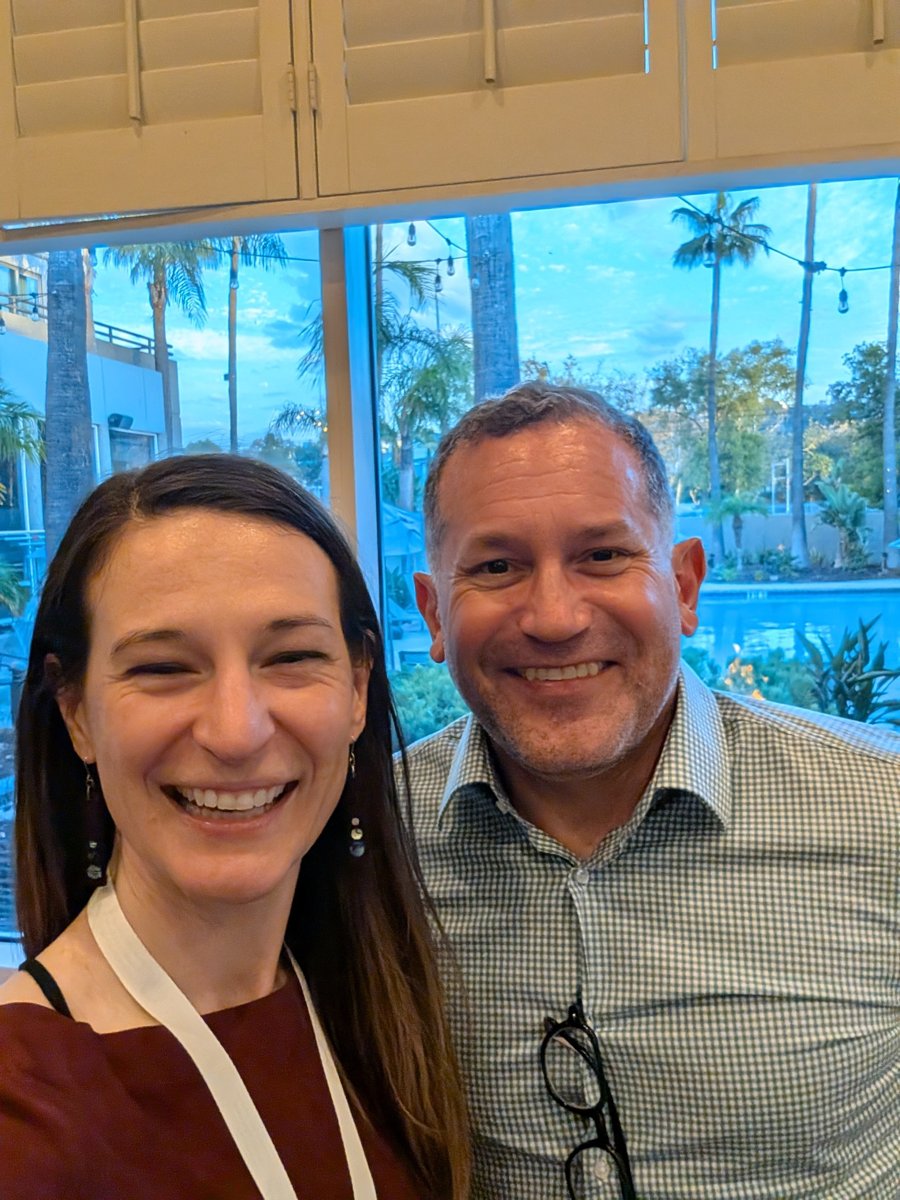 Drs. Tess Eidem and Bradley King (NIOSH) at NCRC 2026 in San Diego.
The talk I was most excited to hear was right after mine. Dr. Bradley King is a Senior Industrial Hygienist with the National Institute for Occupational Safety and Health (NIOSH) in Denver and a past president of the American Industrial Hygiene Association. His work is really pioneering this field.
Working with National Jewish Health, his team studied workers at two Colorado facilities that grow, process, and extract cannabis. They combined symptom questionnaires, blood tests for allergic antibodies (IgE) to cannabis and hemp allergens, and personal air sampling on workers during their shifts. As presented at NCRC:
- Most workers reported symptoms they connected to working with cannabis, and some had avoided the work, stopped, or changed jobs because of them.
- Cannabis and hemp sensitization was linked to lower respiratory symptoms, like chest tightness, wheezing, and shortness of breath, and to workers avoiding cannabis work.
- Airborne cannabis allergen was highest during dust-generating tasks, like large-scale grinding and machine trimming.
Dr. King's work suggests that testing workers for cannabis allergy may help identify those who are at the highest risk for allergy and asthma adverse health events, and that the highest exposure tasks are where controls like local exhaust ventilation and respiratory protection could do the most good. We used different methods at different sites, and we saw similar airborne allergen levels. That kind of agreement is how a field starts to build real evidence.
I'll admit it: I fangirl over Bradley's data. It's some of the most exciting work in cannabis worker health, and getting to introduce it was a highlight of my time at the conference. So it meant a lot when, during his talk, Bradley called me an "honorary industrial hygienist." Coming from someone who has spent his career protecting workers, it was a true honor!
This work matters because cannabis workers are an underprotected workforce. Hundreds of thousands of people work in this industry, which is still illegal under federal law. That makes it hard for federal agencies to study, and there are no exposure limits written for cannabis allergens. NIOSH researchers like Bradley are doing this work anyway, going into facilities, talking with workers, and building the evidence that safer workplaces will be built on. I'm grateful for it, and I'm glad we get to keep working together.
What else stood out
Mycotoxins are coming into focus. Several talks looked at Fusarium and its toxins, from head blight in field-grown and grain hemp to toxin-producing fungi that survive post-harvest decontamination. Mold contamination is a problem for consumers and for the people handling the plants, and it's a big part of where our group wants to make a positive impact as well.
Federal and state agencies need to talk to each other. A presenter from Colorado's Marijuana Enforcement Division walked through a cluster of liver injuries linked to a regulated cannabis product. The cause wasn't a cannabinoid. It was an herbal ingredient added to the formula. According to the talk, the FDA contacted the manufacturer about the product in 2020 but didn't notify Colorado's regulators, and Colorado kept receiving adverse-event reports from 2022 into 2024. That's years in which federal and state agencies weren't sharing what they knew. Adverse-event reporting works, but only when the agencies collecting the reports share them.
The conversations matter as much as the talks. Between sessions I loved learning from and chatting with plant pathologists, third-party testing lab scientists, regulators, researchers, and public health professionals. The best ideas from the week came from hallway conversations, and happy hours. Some of my favorites were debates about Star Trek, sci-fi, and fantasy with my fellow nerdy cannabis scientists (you know who you are!).
 Tess with friend and colleague Kyle Boyar at NCRC 2026 in San Diego.
What this means for operators who want to prevent respiratory exposures
You don't have to wait for regulations to protect your team:
- Look at the tasks, not just the room. Grinding, trimming, sock filling, and waste handling create very different exposures. Assess them separately.
- Measure biology where it matters. If workers report itching, sneezing, or chest tightness, particle counts alone won't explain it.
- Put controls where the dust is made, starting with engineering. Local exhaust ventilation, enclosure, filtration, and wet cleaning come first. Respirators help, but they don't protect the eyes or skin. At one task we sampled, a worker wearing a respirator still had to stop and wash his itching face.
- Treat mold as a worker issue too. Mold that shows up in product testing may also be in the air your team breathes.
If you'd like help assessing exposures or tracking down a contamination source, get in touch. This is the work we love.
Tess Eidem, PhD, is a cofounder of Intrepid Scientific and a Senior Research Associate in Environmental Engineering at the University of Colorado Boulder, where she leads NIH-funded research on occupational respiratory hazards in the cannabis industry. The research described here was conducted at CU Boulder; views are her own. © 2026 Intrepid Scientific, LLC.
Related reading
Mold that shows up in product testing is often the same mold your team breathes. “Total Yeast and Mold” Is Not an Organism walks through identifying the organism and tracing it to where it enters your process.
Talk to us about assessing exposures in your facility